The mission of fast fashion companies is profit and their business model is to produce enormous amounts of trendy, inexpensive clothing to flood the consumer market, whether or not the demand is present. The main textile/fabric used to manufacture fast fashion clothing is primarily synthetic (plastic) fabrics or a blend of fabrics, e.g., 99% polyester, 1% elastane (Spandex/Lycra). Elastane is added to any type of fabric to give stretch or elasticity to the clothing item.
Fast fashion clothing is neither compostable nor biodegradable because most fast fashion, if not all, garments are made from chemicals and petroleum-based compounds called polymers. Examples of petroleum-based fibers are polyester, acrylic, nylon, acetate, polypropylene, Spandex, microfiber, aramid, olefin, and rayon (a semi-synthetic fiber). Most discarded clothing ending up in landfills is from fast fashion brands, where the synthetic fibers used to create the garment do not biodegrade, but break down into microplastics.
If you are interested in minimizing your fast fashion purchases and purchasing more environmentally friendly garments, read the clothing labels!
How to Read And Interpret Clothing Labels
Story: For this post, I trekked to a local thrift store and snapped a few pics of fast fashion clothing labels. Others are from my closet, and a friend’s closet, to show the range of natural and synthetic (plastic) fibers used in the garments we wear.
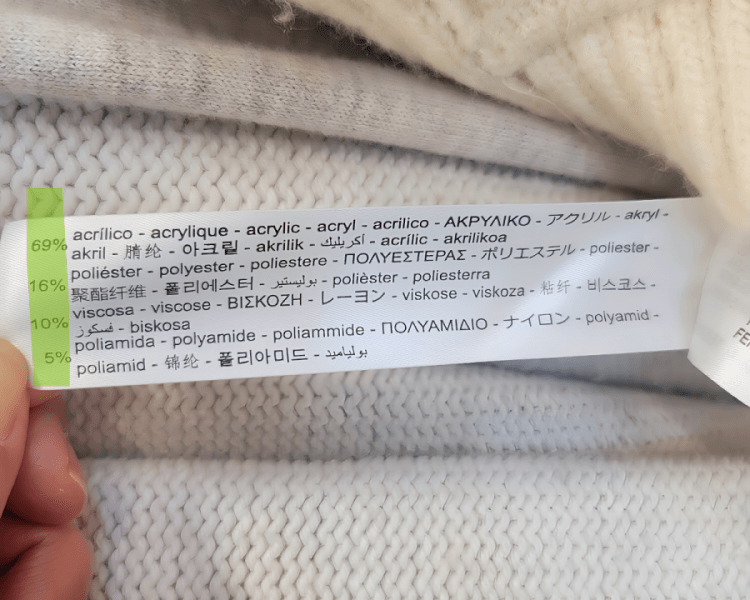
This label is Old Navy, a widely known fast fashion company. The label states: 69% acrylic, 16% polyester, 10% viscose, 5% polyamide. There is NO breathable natural fibers in this sweater. Actually, polyamide can be made from either natural or synthetic fibers, but because Old Navy is a fast fashion company, let’s assume the 5% polyamide is synthetic. If it were a natural polymer, Old Navy would have stated so.
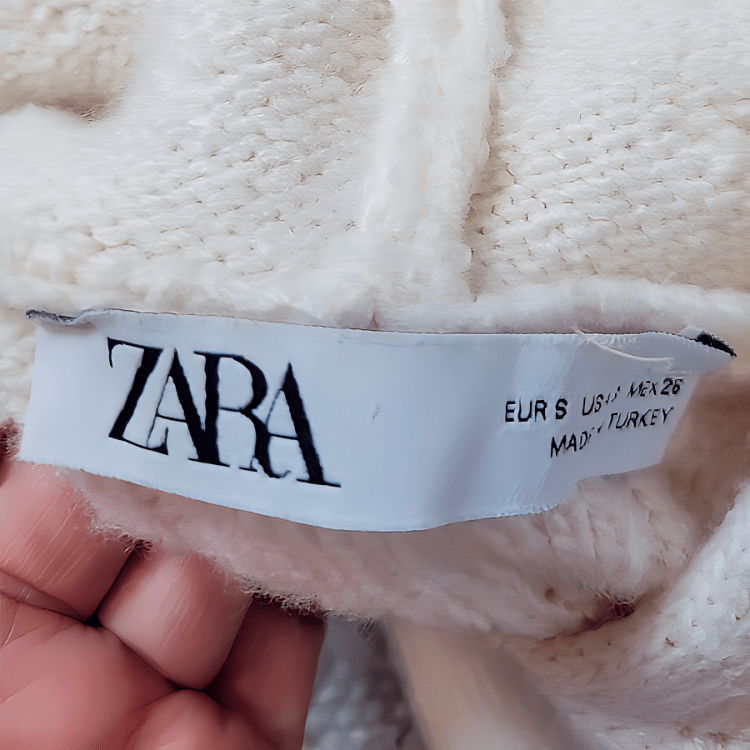
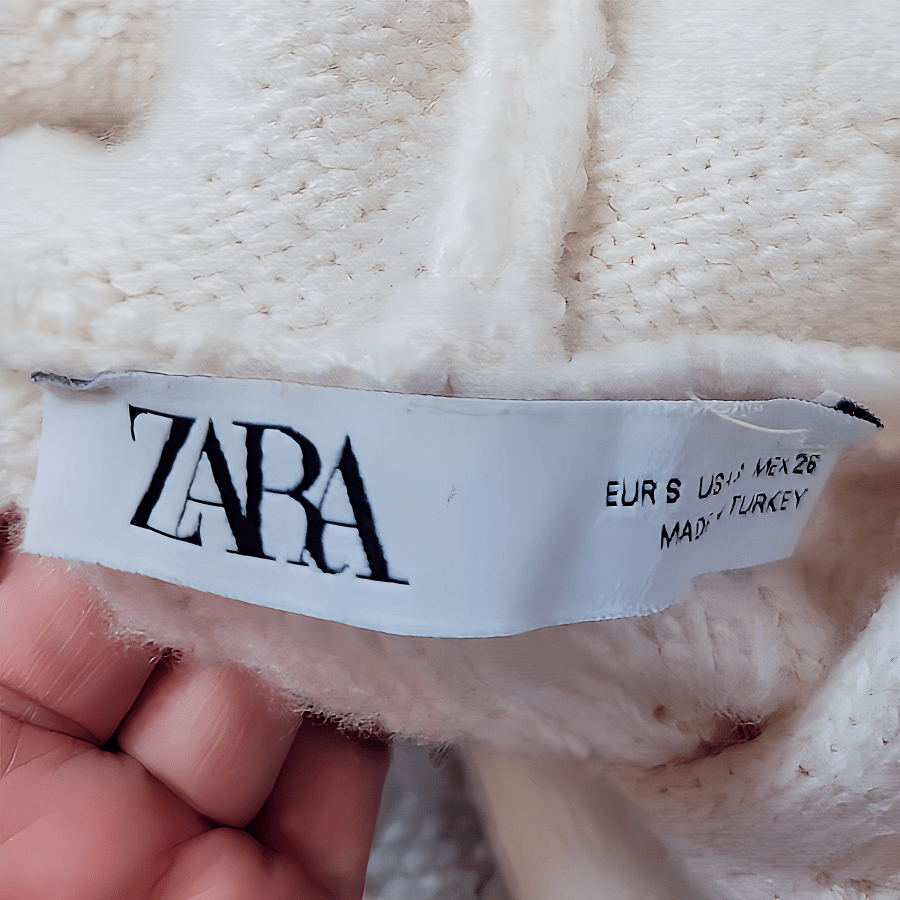
Label for ZARA, a notorious fast fashion company, whose main mission = profits. So, even though the fiber content is not shown, this sweater is most likely made of 100% synthetic (plastic) fibers.
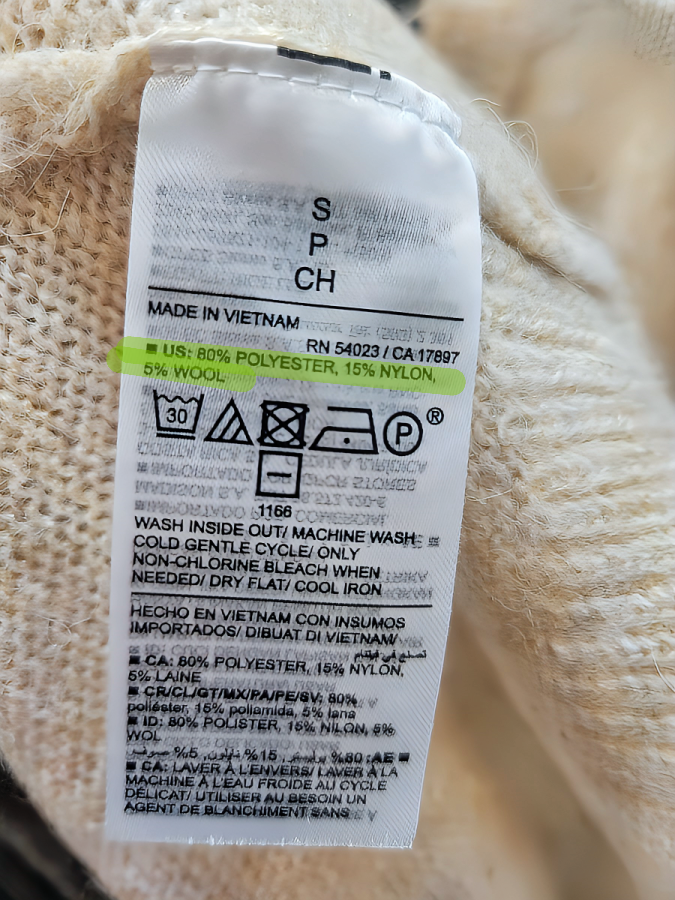
This sweater label is made of 80% polyester, 15% nylon, and 5% wool. The only biodegradable fiber is WOOL, and it is only a 5% component of the entire garment. That means 95% is made with synthetic fibers and is not biodegradable. Rather, the plastic fibers break down into microplastics, which end up in waterways, foods, marine life, wildlife, and in our bodies.
Because of the 5% wool fiber content, the fiber content of this garment is termed ‘blended’. When and if you no longer want this garment, upcycle it, donate or gift it because it is not biodegradable or compostable.
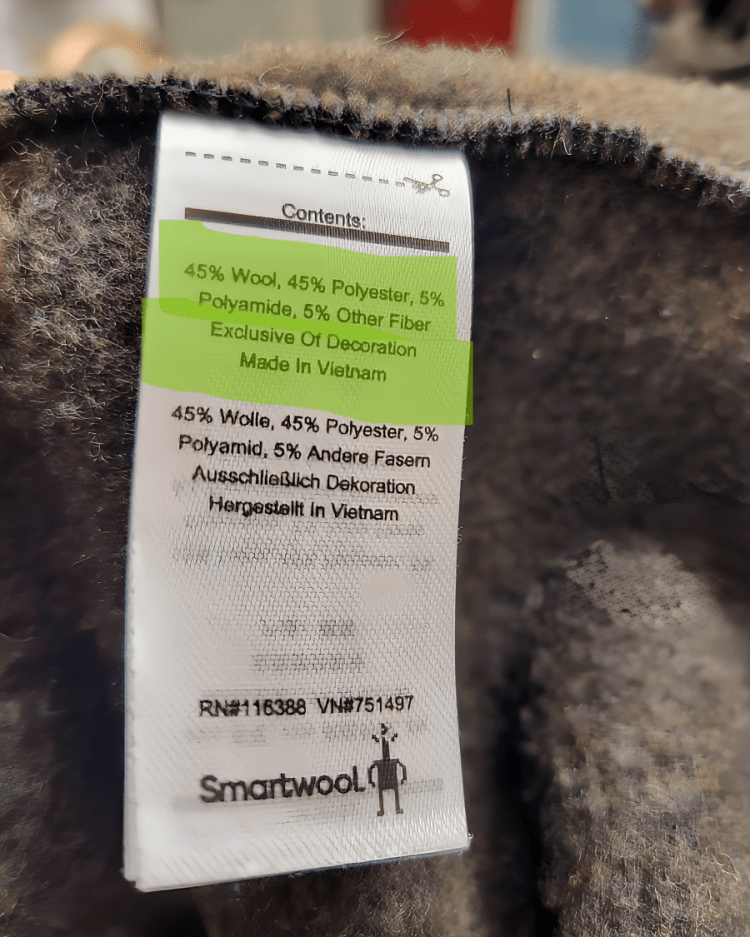
When I heard the clothing brand Smartwool, my initial thought was, “Oh, this jacket is made of 100% wool.” Not so. The fiber content is: 45% wool, 45% polyester, 5% polyamide, 5% other fiber. Note: polyamide can be natural fibers (silk, wool, collagen) OR synthetic (plastic). I’m going to assume the 5% polyamide is synthetic since it follows the 45% polyester. The fiber content is considered mixed/blended.
The history of Smartwool is interesting! Developed by ski instructors in 1994, the brand is now owned by Vanity Fair. Their commitment to using renewable energy and sustainability is commendable. Just wish the fiber content is 100% wool, which would make it compostable and biodegradable. Read more here…How sustainable is Smartwool?

This garment is made with 100% cashmere, a natural fiber, and is compostable and biodegradable.
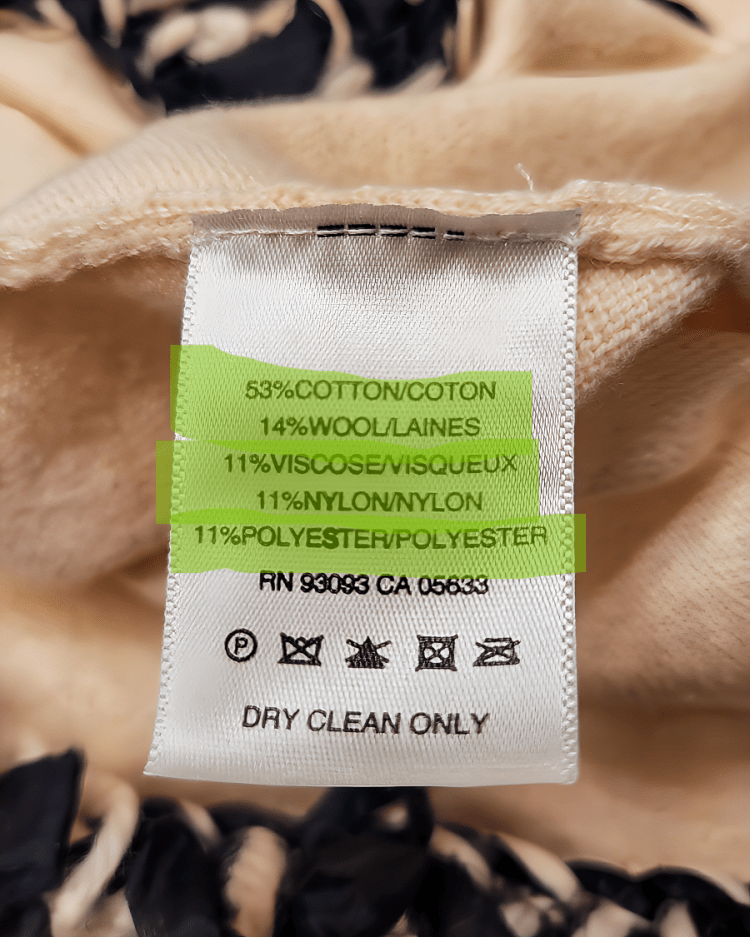
The fiber content of this garment is 53% cotton, 14% wool, 11% viscose, 11% nylon, 11% polyester. In sum, 67% fiber content is natural (cotton and wool), and 33% is synthetic/plastic. This garment is made with mixed fibers because of the use of natural fibers and synthetic/plastic fibers, and is termed ‘blended.’
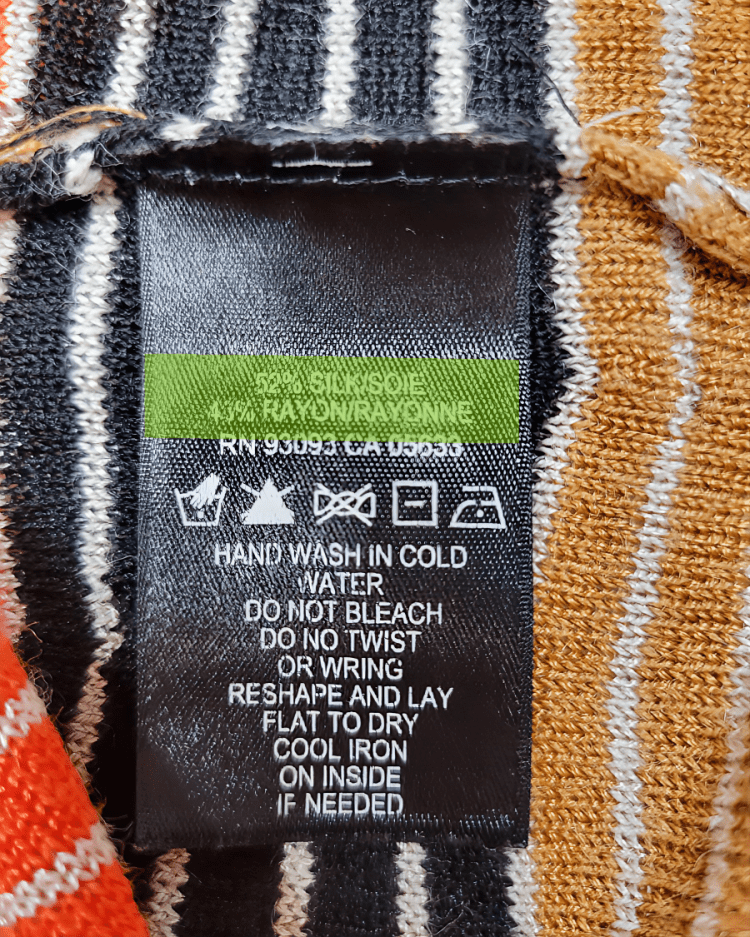
The label shows 52% silk and 43% rayon fibers. Silk is a natural fiber, and rayon is semi-synthetic. Meaning, greater than 52% is natural fibers because rayon is made by dissolving natural cellulose, typically bamboo or beech and pine wood pulp, with a chemical solution. The mixture is then pushed through a spinneret to create long filaments, which are woven or knitted into textiles.
The fiber content of this garment is blended because of the combination of natural and semi-synthetic fibers
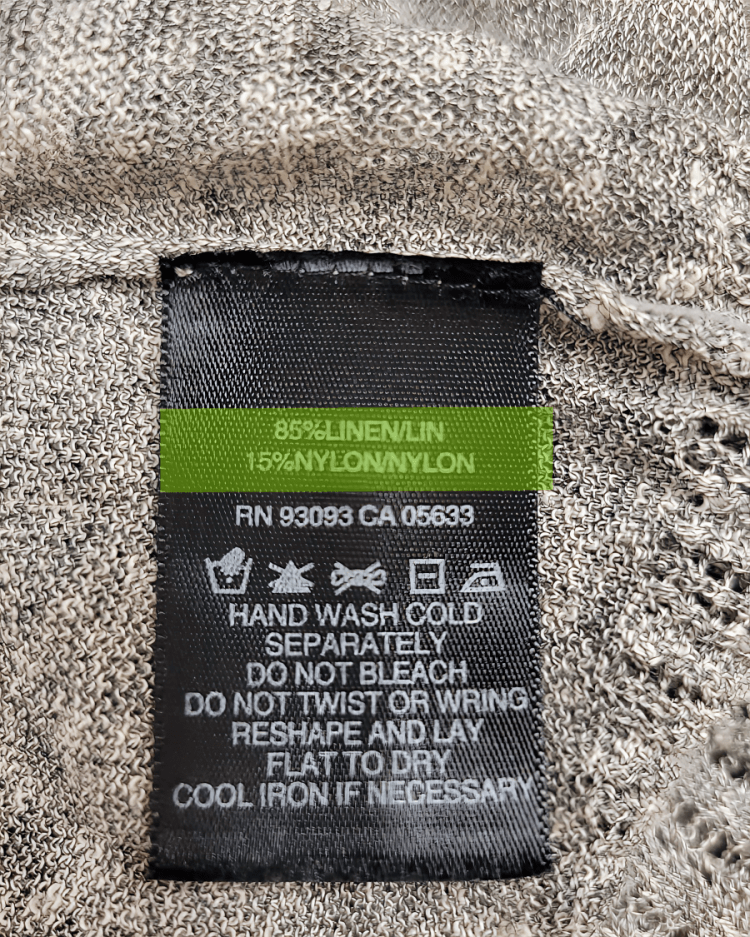
This knitted garment is made of 85% linen + 15% nylon…a blended fabric.
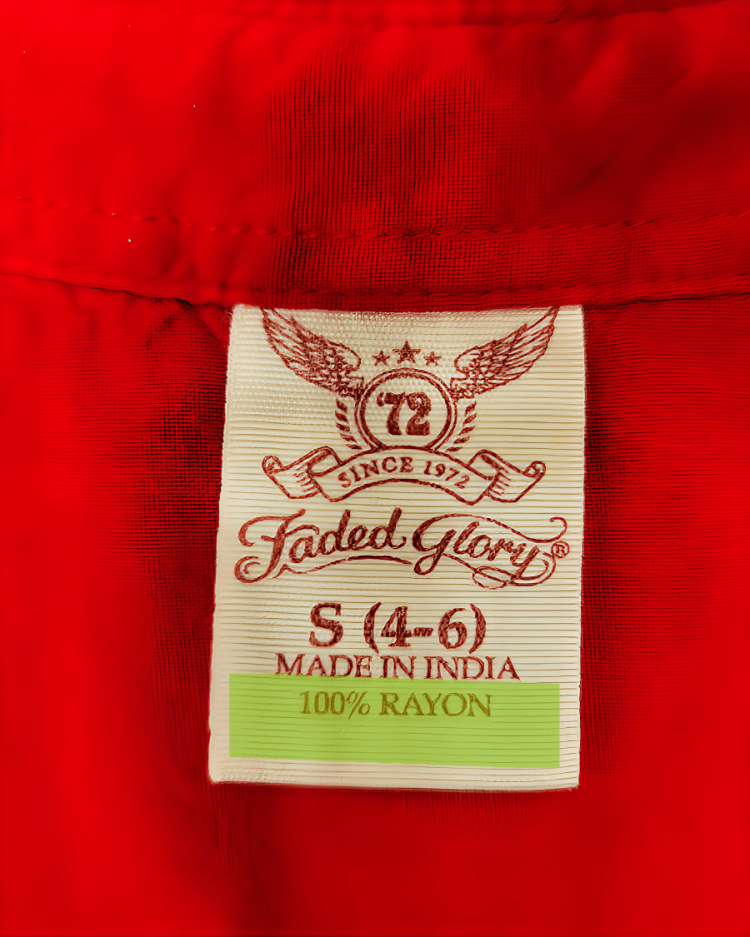
The fiber content on this label is 100% rayon, a semi-synthetic fiber, also known as manmade cellulosic fiber. Rayon is not a natural fiber. Manmade cellulosic fibers start as natural materials but are then processed with chemicals to change their composition into rayon.
Rayon is created from regenerated cellulose, typically derived from wood pulp or bamboo. The cellulose/wood pulp is broken down, combined with chemicals, and forced through spinnerets to make the rayon fiber filaments.
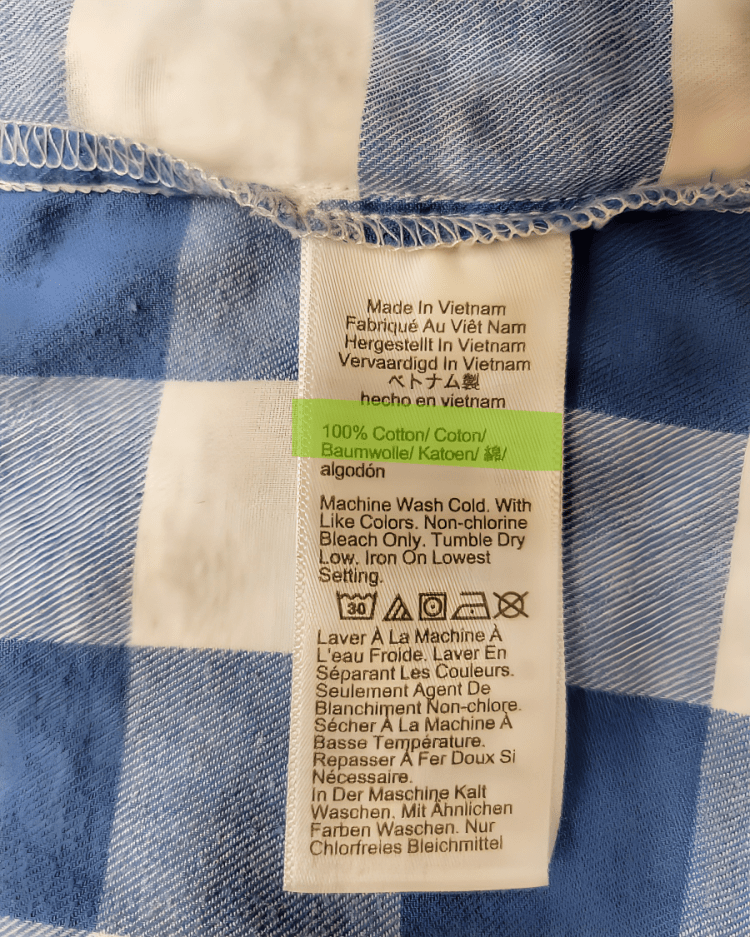
This is the first garment made with 100% natural fiber – cotton! Cotton is biodegradable, and therefore, sustainable.

This garment is 100% synthetic (plastic) because it has 90% nylon + 10% elastane. Meryl nylon is a brand name for a line of microfibers, and Spandex (elastane) is a very stretchy synthetic fiber made from polyurethane (a synthetic polymer).
Elastane/Spandex/Lycra was invented by Dupont, the chemical company, in 1959.
Spandex and Lycra are brand names for elastane.
The Bottom Line: How You Can Become More Sustainable:
Most clothing today has ‘blended’ fiber content. As seen in the eleven examples above, 9 of the 11 garments are either ‘blended’ or 100% synthetic. And only 2 are 100% natural fibers, which means the 2 garments are compostable, biodegradable, and therefore, sustainable. So what should we do with clothing that is outdated or no longer wanted?
♻️ Textiles and clothing with mixed fibers, such as natural fibers with synthetic fibers, this is called blended fibers (aka mixed fiber content), and is not compostable. Natural fibers biodegrade, but the synthetic fibers (plastics) do not, and break down into microplastics.
♻️ With garments with blended fiber content, upcycle them into other useful items/products. A few examples: adult clothes into kids’ clothes; denim jeans into potholders, coasters, bucket hats; sweaters into slippers with non-skid proof soles; mens’ dress shirts into kids’ clothes; sweaters into pillows. When upcycling garments, sewing skills are necessary. Take up sewing and watch your creativity soar!
♻️ Shop at thrift and charity stores.
♻️Donate & recycle clothing to friends, homeless shelters, women & children shelters, half-way houses, non-profits.
♻️ ️When purchasing new clothing, buy from eco-friendly companies.
♻️ Take up sewing, make your own clothes and make new friends! Not only will you learn a lifelong life skill, but you will also get many compliments and your creativity will take off.
Download your FREE Sustainability Checklist!
Don’t Forget To Subscribe! When you subscribe, you will only get notified twice per month…promise.
Discover more from urban HANDmades
Subscribe to get the latest posts sent to your email.
 urban HANDmades