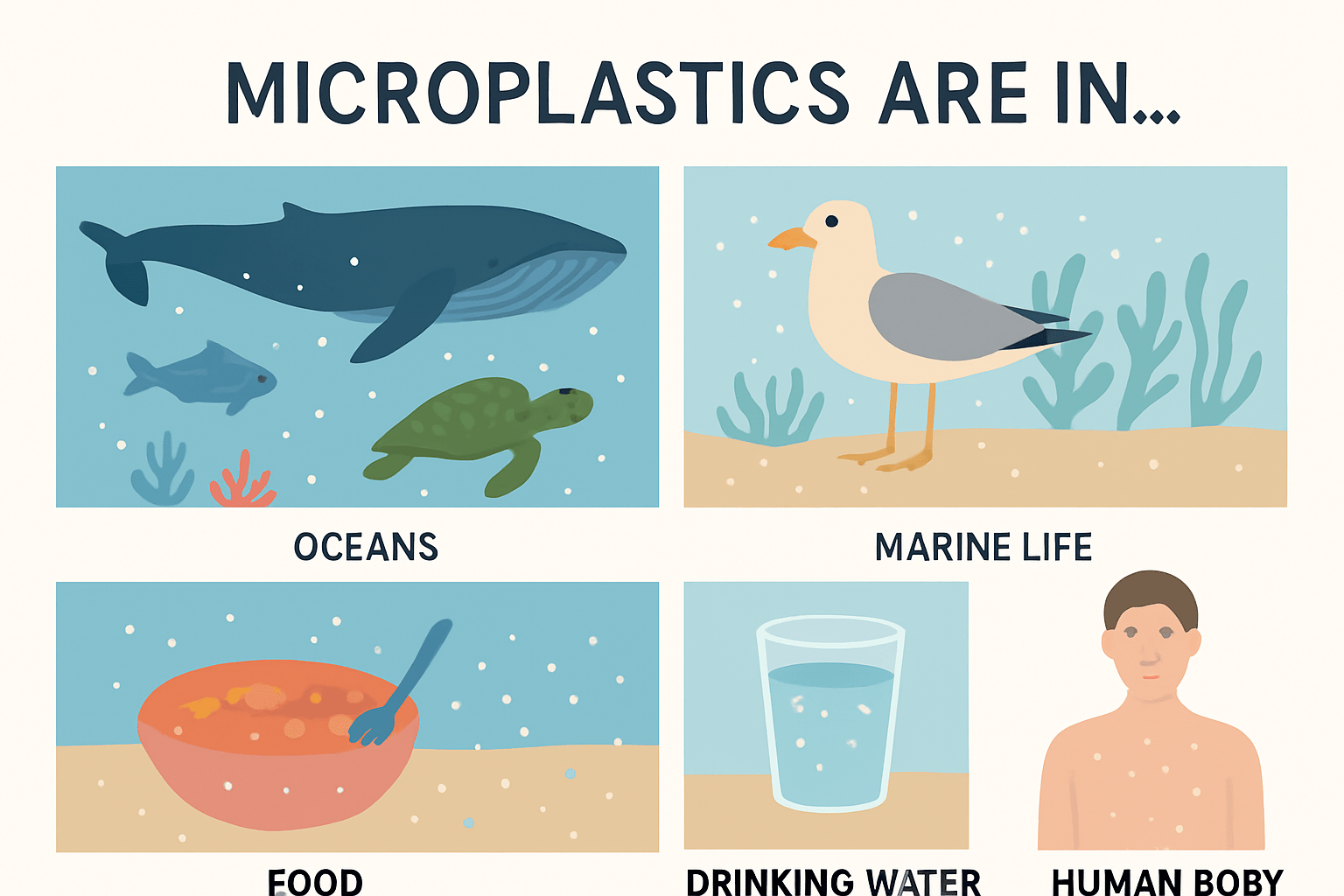
Have you ever wondered what microplastics are and if these tiny pieces of plastic affect the environment, our health, or contribute to climate change? Do you ask yourself, “What can I do to reduce microplastics?”Then, you are in the right place!
Microplastics are tiny plastic particles, smaller than 5 millimeters, about the size of a sesame seed or smaller, and fall into two major categories.
1. Primary microplastics: These microplastics are intentionally manufactured in tiny sizes for various uses in industries. Microplastics are used in industrial abrasives for sandblasting, and plastic pellets in manufacturing processes. Exfoliating creams and toothpaste used to be manufactured with microplastics, but are now banned in many countries.
2. Secondary microplastics: These microplastics result from the breakdown of larger pieces of plastic or plastic dust. These are unintended microplastics. The degradation of larger plastics to microplastics comes from several sources. Ultraviolet radiation (sunlight) weakens plastic polymers, causing them to become brittle and fragment. Physical forces such as waves, wind, abrasion, and friction break plastic objects into smaller pieces. Heat or high temperatures accelerate the breakdown of plastics and contribute to fragmentation. Chemical reactions with the environment, such as oxidation or hydrolysis, further degrade plastics into micro-sized particles.
A few examples of secondary microplastics
Nearly every industry uses plastics for packaging (food, medical), construction (pipes, insulation), automotive (parts, interiors, tires), electronics (casing, wires), healthcare (devices, syringes, medication containers), and consumer goods (toys, flooring, furniture, appliances). Plastic is versatile, lightweight, durable, and cheap to manufacture. Its usefulness is ubiquitous. But there is a serious downside to plastics, and that is microplastics…the breakdown of plastics into tiny fragments or shards that infiltrate everything. Below are a few examples of the origin of microplastics:
- Shedding of fibers from synthetic (plastic) clothing and other textiles made by fast fashion brands, the automobile industry, the textile industry, and landscaping. Synthetic (plastic) fibers are produced with polymers such as polyester, nylon, acrylic, olefin, polypropylene, acetate, and Spandex…all of which are plastic.
- Microscopic plastic shards from the breakdown of plastic bottles, plastic bags, food & product packaging
- Plastic particles from the breakdown of tires
This is how plastic dust (microplastics) forms
As mentioned above, microplastics are secondary microplastics, the end result of the breakdown of plastics through several degradation processes. Fragmentation of plastics from sunlight (UV), heat, oxygen, and physical abrasion (like rubbing clothes on furniture) causes the plastic fibers (polymers) to become brittle and break down into smaller and smaller pieces. Fibers from plastic clothing fabrics like polyester and nylon, carpets, and upholstery constantly shed plastic fibers through friction and abrasion, which become part of household dust. Physical wear & tear of everyday items like plastic toys, containers, and packaging develops microcracks and roughens plastic surfaces, and releases microscopic particles into the air.
Interestingly, a study called “Microplastics in House Dust from 12 Countries and Associated Human Exposure,” published in Environment International, indicates that people are exposed to microplastics mainly through the dust found inside their homes.
Microplastics are now found in oceans, rivers, soil, air, food, drinking water, and in human blood. Microplastics are in everything and everywhere.
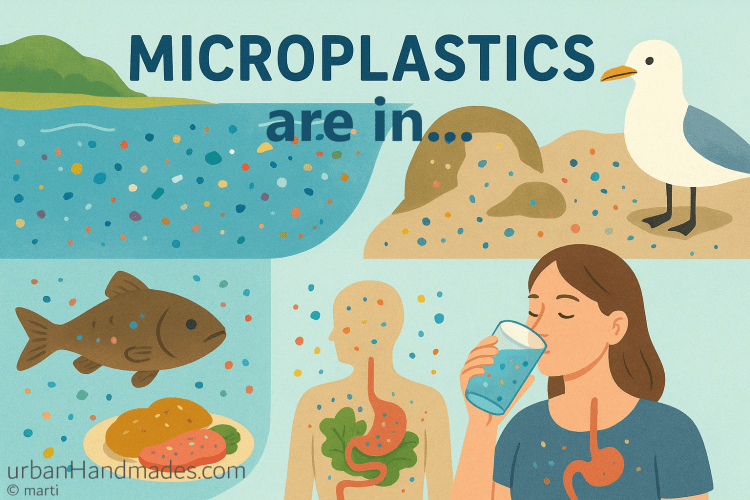
How Microplastics Affect Climate Change
Although microplastics do not directly emit greenhouse gases, they influence climate change in significant indirect ways. Let’s look at the ways microplastics affect the climate.
| Indirect Ways Microplastics is Affecting Climate Change | Effects of Microplastics |
|---|---|
| Over 99% of plastics are made from oil, gas, or coal (fossil fuels). | The emissions created during the lifecycle of plastic products are greater than 1.8 metric tons of carbon dioxide (CO₂) annually, and are projected to double by 2060. |
| Oceans absorb about 25–30% of global carbon dioxide (CO₂) | Harms marine life that stores CO₂, like phytoplankton and zooplankton (tiny carbon-capturing organisms). These natural biological carbon dioxide pump organisms ingest microplastics, which reduces their ability to absorb CO₂. Microplastics also disrupts digestion and reproduction. |
| Microplastics affect soil health | Healthy soil captures carbon dioxide. When microplastics contaminate soil, the structure of the soil weakens, microbial activity in the soil changes, and plant growth is stunted. This reduces the soil’s ability to absorb CO₂. |
| Microplastics release greenhouse gases | Plastics release methane and ethylene when exposed to sunlight. Both are greenhouse gases. While emissions from individual items are small, it is the scale of plastic waste , worldwide, that makes this a growing concern. |

Steps You Can Take to Reduce Microplastics
1. Reduce Single-Use Plastics…this is considered the most effective step
–Avoid bottled water…microplastics concentration is very high in bottled water because of the plastic bottle.
–Use reusable shopping bags, reusable bottles, straws (metal, bamboo), and utensils (metal, wood).
–Choose products packaged in glass, metal, cardboard, or compostable materials. OR bring your own reusable containers or carriers.
2. Avoid Fast Fashion Brands…clothing is the #1 source of microplastics pollution
–Choose natural fibers and quality construction (cotton, hemp, linen, silk, wool, and other hair fibers). Plus, natural fibers are breathable and better for your skin.
—Avoid fast fashion brands that produce clothing with nearly 100% synthetic (plastic) fibers.
–Learn about the environmental impact of fast fashion brands whose business models are neither sustainable nor earth-friendly.
3. Improve Household Waste Practices
–Reuse containers before recycling. Reuse glass containers for storing, milk containers for seedlings, metal and aluminum cans for lawn sculptures.
–Avoid burning plastic waste, which releases toxic fumes.
–Recycle properly. Clean all recyclables before putting them curbside or recycling at your local recycling center.
–Support your local composting programs or compost your garden.
4. Change Laundry Habits When Laundering Synthetic (Plastic) Clothing
–First, read the laundering label, and wash synthetic clothes less often to reduce fiber shedding
–Use cold water to reduce fiber shedding.
–Avoid purchasing synthetic (plastic) clothing.
5. Avoid Products With Microbeads
–Look for polyethylene (PE), polypropylene (PP), or PMMA (poly methyl methacrylate) in acrylic/plexiglass, in the ingredient lists. Although these are banned in many places, some products still contain them
6. Make Microplastics-Conscious Purchasing Decisions
–Choose bar soaps over bottled ones, and recycle the single-use plastic wrapping and paper labeling.
–Choose wooden, metal, or bamboo household goods instead of plastic.
–Avoid glitter unless it is made with plant cellulose. Traditional glitter is a microplastics pollutant. It is made from thin plastic films, usually polyester (PET), coated with reflective aluminum and dyes, and then cut into tiny pieces.
7. Support Policies and Innovations
–Support bans on single-use plastics. As of 2024, 12 states in the US have banned single-use plastic shopping bags.
–Vote for extended producer responsibility (EPR) laws.
Extended Producer Responsibility (EPR) laws are rules that require companies to take responsibility for what happens to their products after people are done using them. This includes paying for and managing collection, recycling, or safe disposal. Instead of taxpayers or local governments covering these costs, the companies that make the products do. These laws also encourage companies to design products and packaging that are easier to recycle by charging higher fees for hard-to-recycle items, and the money collected helps fund recycling programs for things like electronics, batteries, paint, and packaging.
–Support your local recycling center programs.
Sources:
- Scientists discovered microplastics in human semen and follicular fluid. CNN
- Effects of Soil Microplastics On Plant Growth and Soil Health. Research Gate
- Microplastics in house dust from 12 countries and associated human exposure. Environment International
- Global Plastics Outlook. Organisation for Economic Co-operation and Development (OECD)
- UN Climate Summary United Nations on climate change
4 Takeaways
—Microplastics originate from synthetic clothing, tires, degraded packaging, and industrial sources.—
—They indirectly worsen climate change by interfering with carbon storage, releasing greenhouse gases, and promoting more fossil fuel extraction.
—Citizens can significantly reduce microplastics through everyday choices in clothing, laundry, transportation, and product selection.
–Small lifestyle changes can significantly reduce microplastics pollution.
Don’t Forget To Subscribe! You will only get notified twice a month…promise!
Download the FREE sustainability checklist and start your sustainability journey!
Discover more from urban HANDmades
Subscribe to get the latest posts sent to your email.
 urban HANDmades