In this post, 2 topics are covered:
- Upcycling 100% denim jeans
- Time needed to decompose 100% denim jeans vs mixed fabrics jeans
But first, let me tell you the story about a pile of discarded jeans repurposed into useful things…
A few years ago, I was searching for a vintage Sears Kenmore sewing machine. The ones with a solid metal body and a strong motor…one built to last a lifetime as long as it was well-maintained. After seeing a listing, I drove one hour to meet with the seller. After the typical meet ‘n greet salutations, I went to work examining the machine while chatting with the sellers. Their story is interesting! Both of them worked in the coal mines in Kentucky all their lives and retired to Atlanta. They were salt-of-the-earth people, no pretenses, no hidden agendas, polite, friendly, calm, and honest. And no drama! They appeared to be in their late 60s or early 70s, but probably were older due to years in the coal mines. Unfortunately, the sewing machine was not working well, and I had to decline. Upon departing, the woman asked me if I wanted a pile of deconstructed old jeans she and her husband had outgrown. The denim was 100% cotton. Without knowing what I was going to do with them, I graciously accepted.
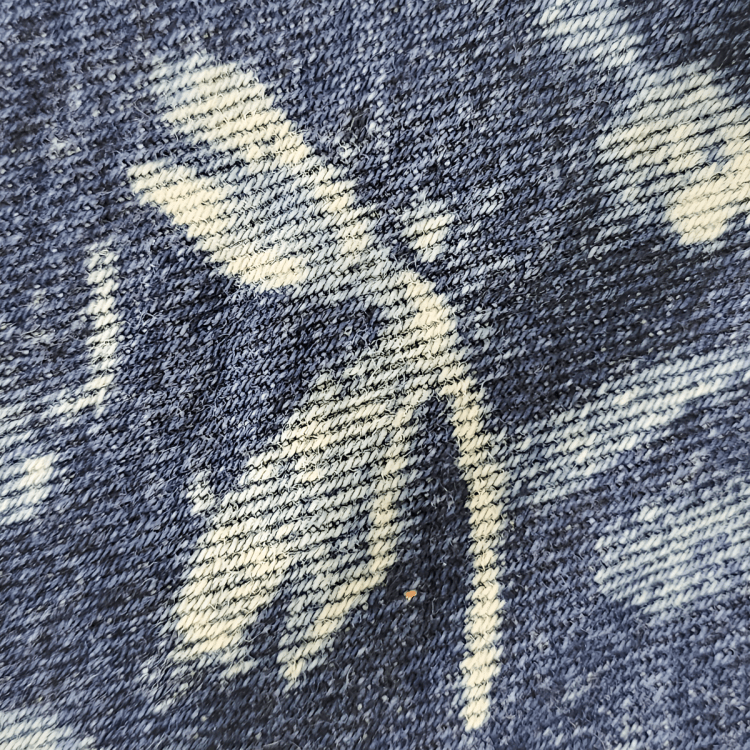
Fast forward a few years. I am now experimenting with the pile of denim, and it is an interesting process. By reimagining textile waste with paintbrushes and bleach, a new usable fabric is created, which is then repurposed into useful items that everyone uses on a daily basis. Going through this creative process with discarded denim, I am contributing to sustainability, the circular economy, zero waste philosophy, and caring for the earth.
Upcycled denim into: potholders
- Smart for the environment
- Smart for sustainability & building your own circular economy
- Smart for a zero-waste life
- Smart for caring for the Earth
- Avoids further textile waste and clothing landfill pollution
- Smart for your wallet
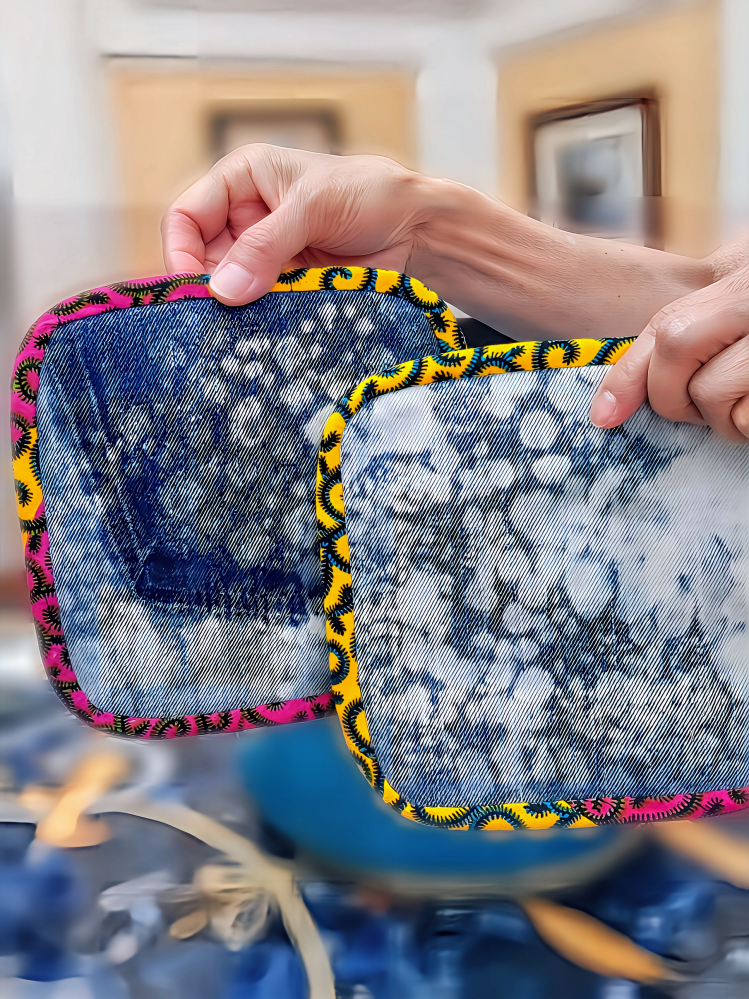
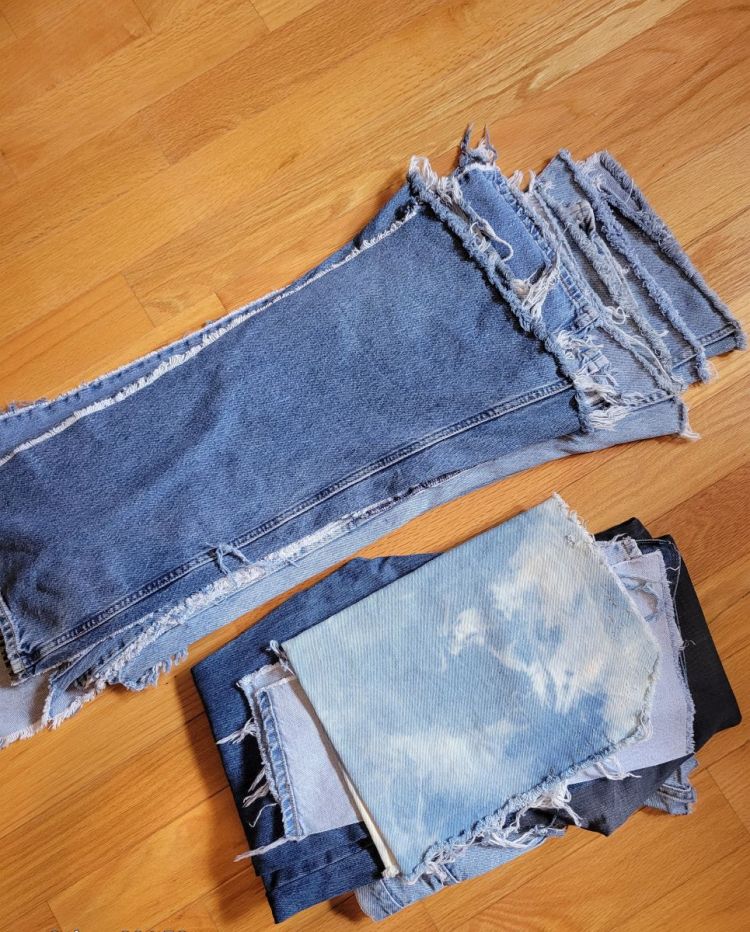
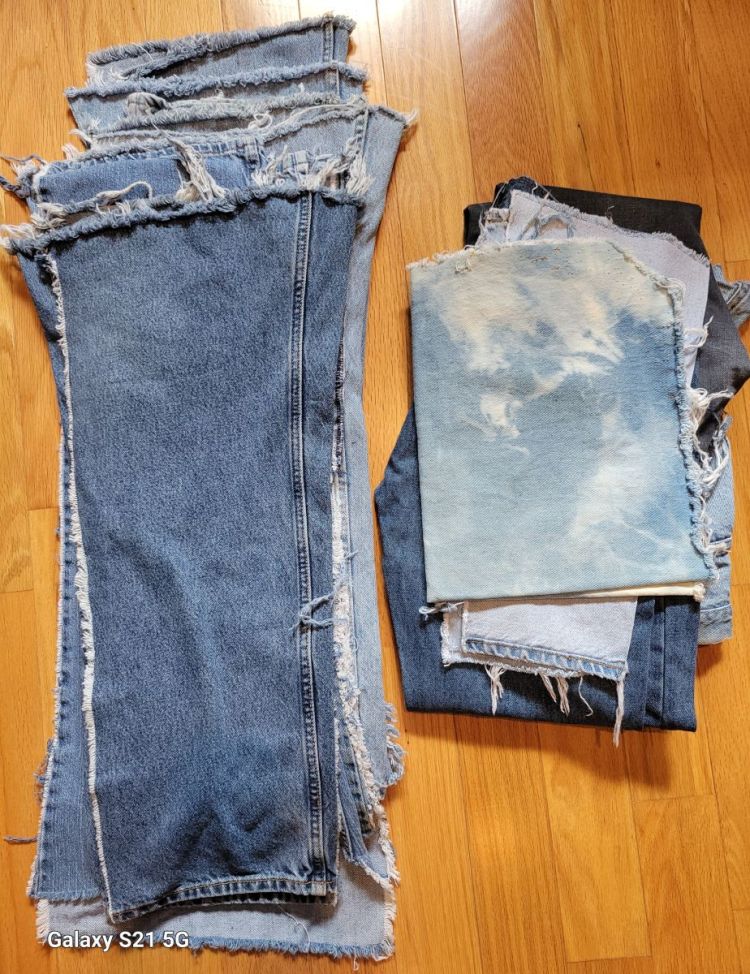
From textile waste headed for the landfills to useful upcycled items for the home:
Example 1: upcycled denim potholders
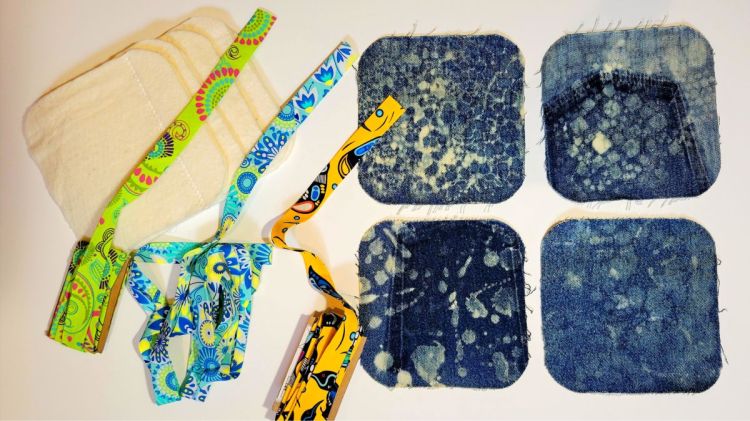
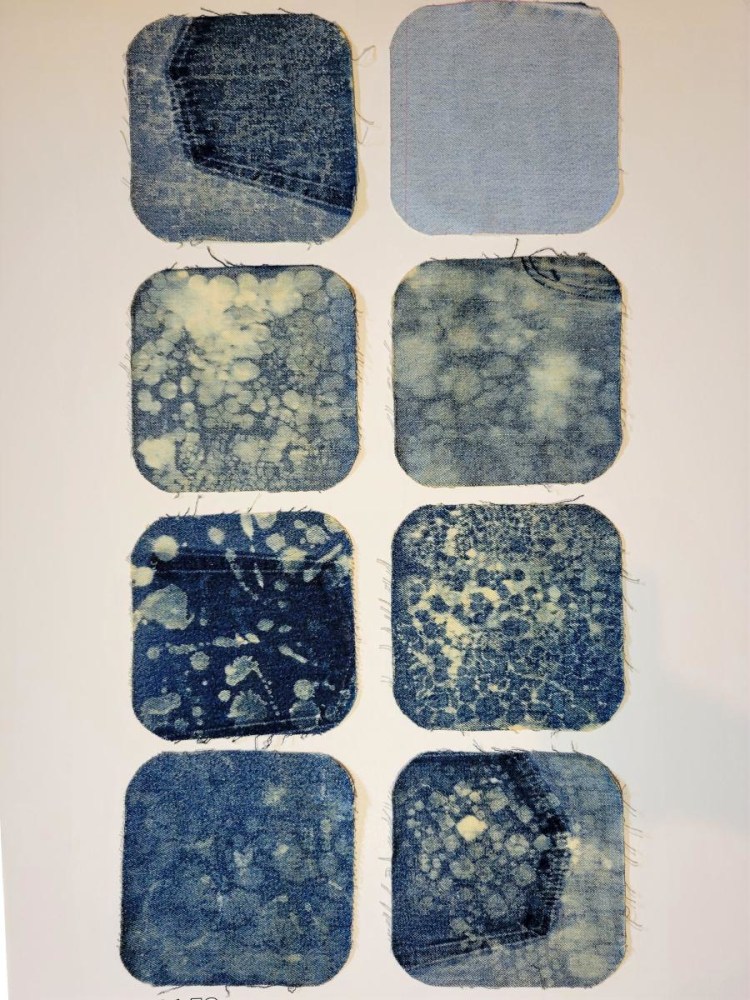
Example 2: Denim Coasters


Question: If denim jeans were discarded to the landfill, rather than repurposed, how long will it take for denim to decompose?
2 Answers:
- Denim made from 100% cotton decomposes in a few months to up to 1 year, depending on the compost conditions. This is because cotton is a natural fiber and is relatively quick to biodegrade. BUT, if denim is landfilled, it can take up to years because microbes and oxygen are limited.
- Blended denim means the product is made with cotton plus synthetic materials like polyester, nylon, or spandex for a stretchable and more comfortable fit. However, synthetic fibers (plastics) do not biodegrade.
- Nylon: Can take up to 40 years
- Polyester: Can take up to 200 years
- Spandex/Lycra/elastane: Does not break down, breaks apart into tiny pieces
Plastics do not break down…they break apart into microplastics
Eco Tip:
If you want to dispose of old denim sustainably, consider:
- Recycling through textile recycling programs.
- Reusing (as cleaning rags, crafts, or insulation).
- Donating if it’s still wearable.
- Composting 100% cotton fabrics, clothing, and jeans contributes to sustainability and the circular economy. Click here for Step-by-Step Guide to Composting 100% Cotton.
Sources & Studies
- Textile Industry and Environmental Reports:
- Environmental Protection Agency (EPA) and other environmental organizations often report that cotton fibers biodegrade within a few months to a year under composting conditions.
- Scientific Articles:
- “Biodegradation of cotton and synthetic textiles in soil under different conditions” — found that 100% cotton textiles degrade within 2-5 months under aerobic composting conditions. Citation: Kwan, A. et al. (2016). Environmental Science & Technology, 50(13), 6934-6941.
- Textile and Waste Management Organizations:
- The Textile Exchange notes that cotton biodegrades in about 5 months to 1 year in the right environment.
- Cotton Inc. states cotton waste, when properly composted, can significantly contribute to the organic matter content of compost, enriching its nutrient profile.
- Reports on Denim Waste:
- Denim, due to its tight weave and potential dye/chemical treatments, may take slightly longer than plain cotton.
- A study by Knitwear Technology Journal mentions denim biodegrades slower due to indigo dyes but still within 6-12 months in composting conditions.
 urban HANDmades